The Cozy Tea Corner Checklist: 8 Essentials for Small Spaces

A tea corner needs less room than you'd think. Three feet of wall, one comfortable seat, and a surface about the size of a dinner tray will do it. In a studio or a dorm room, where the same few square metres serve as bedroom, kitchen, office, and storage, that small patch of floor earns its keep by doing one job only: it's where you sit with a cup and stop working.
Most tea nooks fail for boring practical reasons. The kettle lives in the kitchen. The cups are in a cabinet. The chair quietly becomes a drying rack for laundry. Set the corner up so it stays usable and it becomes the part of your home you look forward to.
Pick the Seat Before Anything Else
Everything else arranges itself around where you sit. If the chair is uncomfortable, nothing else matters — you'll end up drinking your tea standing at the counter, wondering why you bothered.
Measure the candidate spot before you buy anything. A compact armchair usually needs around 75 cm of width plus a little clearance behind it for reclining or reaching. A cushioned stool takes half that. A floor cushion and low table take almost no wall space at all, which is often the right answer in a dorm room where every centimetre is shared with a bed and a desk.
Test the reach, not just the look
Sit down. Can you pick up a full cup without leaning forward or twisting sideways? Your elbow should rest at roughly the height of the table surface. If you have to stretch, you'll spill tea on your book, and you'll stop using the corner. A folding chair that tucks behind a door when you need the floor back is a perfectly respectable choice — this is a tea corner, not a showroom.
Find a Surface That Earns Its Footprint
The best small-space tea table is a tray on furniture you already own. A wooden tray resting on the end of a dresser, a bookshelf top, or a wide windowsill instantly reads as a tea station and costs you nothing but the tray.
If you want a dedicated piece, three options work well in tight rooms: a nesting table that slides away under a bigger one, a wall-mounted shelf fixed at elbow height, or a folding tray table. All of them can disappear when you need the space for something else.
The rule that keeps a small surface useful is simple: it should hold one cup, one small pot, and a book. If it can hold more, it will, and within a month you'll be moving a stack of mail every time you want to sit down.
Keep the Whole Kit in One Place
Tea corners get abandoned because they're inconvenient. If making a cup means a trip to the kitchen for the kettle, then another trip for a clean mug, you'll use the corner twice and go back to drinking from a travel cup at your desk.
Gather everything into a single container — a tray, a shallow basket, or a lidded box that slides under the table. Mine holds:
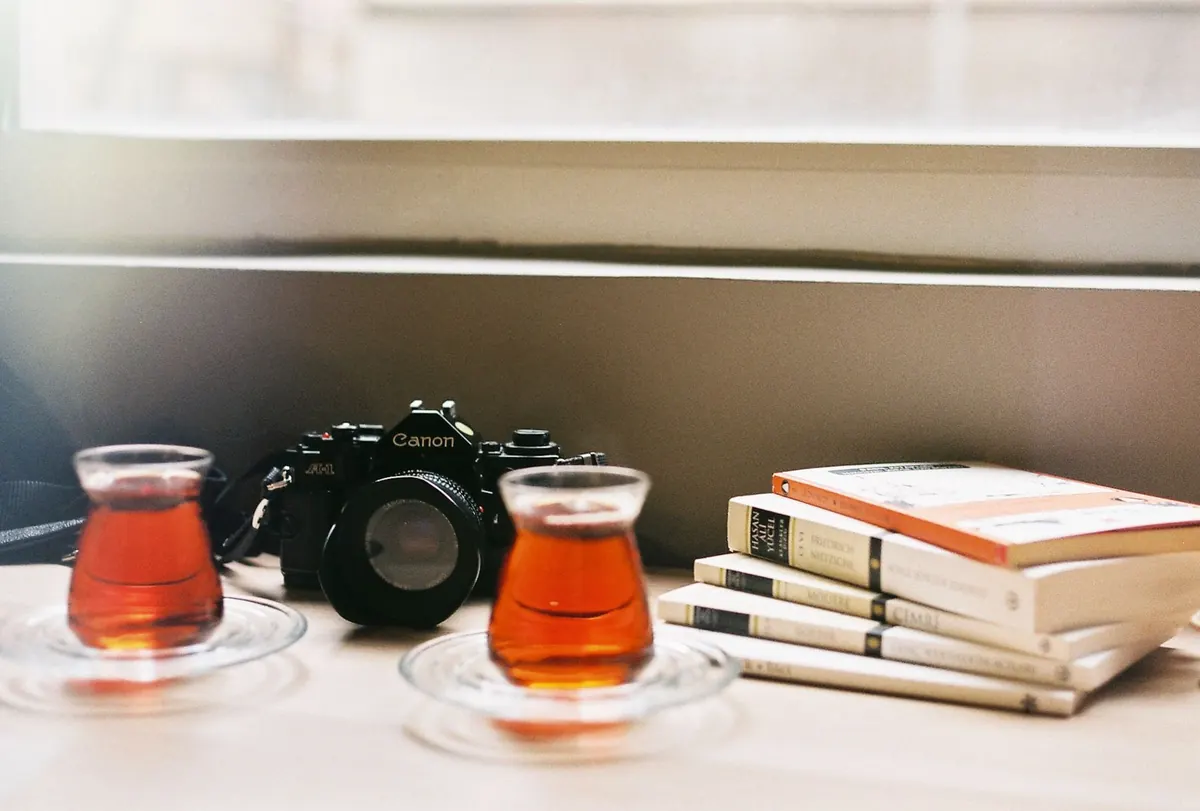
- Two cups, because occasionally someone visits
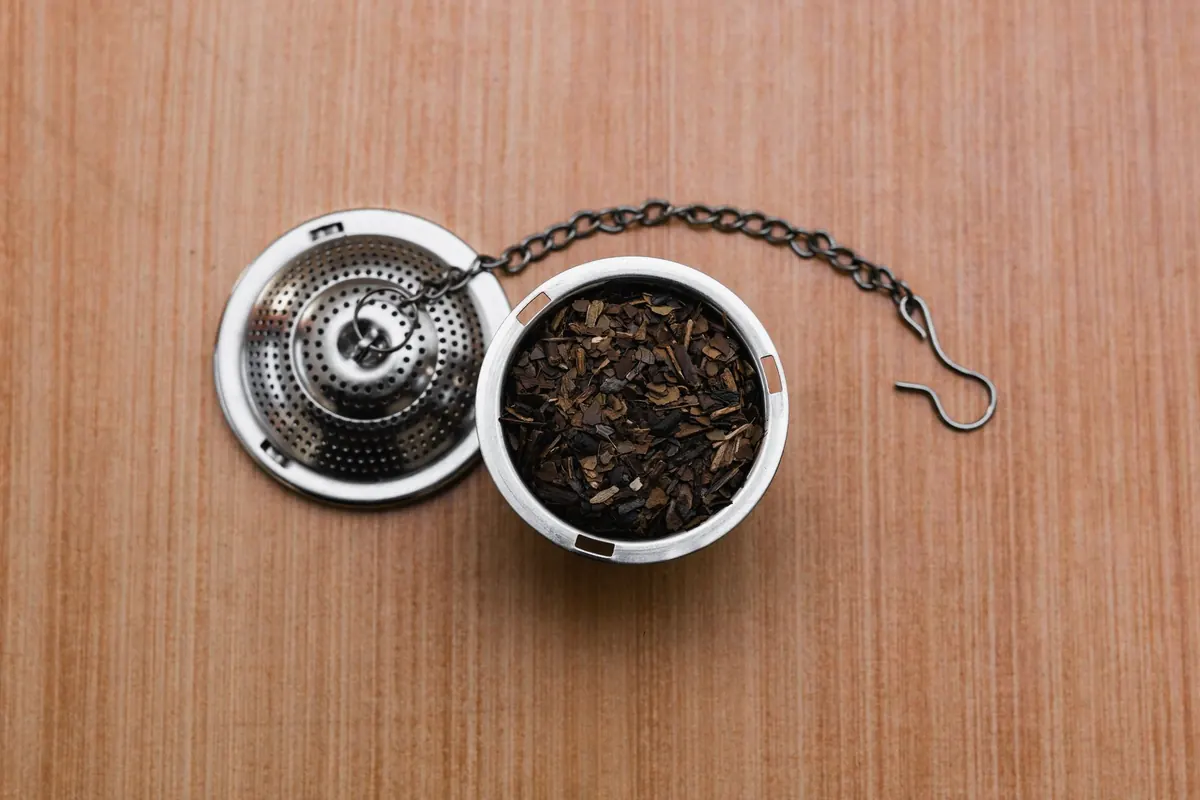
- A small pot, gaiwan, or a strainer that fits your mug
- One tin of everyday tea and one of something better
- A timer or your phone set to count steeps
- A small cloth for drips
- A coaster, if your surface is wood
Water is the one thing you can't always keep in the corner. An electric kettle is ideal if your room allows it — in a dorm, check your housing rules on appliances before you buy. Otherwise, fill a thermos in the kitchen and bring it back; it keeps water hot long enough for two or three cups. Store your tea in an airtight tin, away from light and heat, and keep it well away from coffee and spices. Tea leaves pick up whatever smells are nearby, and a jasmine green that tastes faintly of cumin is a sad discovery.
Light It Like a Living Room, Not an Office
Overhead lighting is what makes a corner feel like a workspace. Add one small lamp with a warm bulb and leave the ceiling light off when you sit down. A clip-on lamp attached to a shelf, a rechargeable table lamp, or a plug-in wall sconce all work. If you can't install anything, a battery-powered puck light hidden under a shelf gives a surprising amount of glow for very little money.
Candles are lovely, and there's no real substitute for the small ceremony of striking a match. Just never leave one burning unattended, keep it clear of curtains and paperbacks, and put it out before you doze off in the chair.
Then add softness. A throw blanket in a basket beside the seat, a small rug underfoot, and a pair of slippers within reach change how long you're willing to stay. Cold feet end more tea sessions than boredom does.
Scent, Sound, and Small Comforts
Two warnings worth taking seriously. First, don't put a strongly scented candle or a diffuser next to your tea. If the corner smells of vanilla and pine, the tea disappears entirely. Second, guard the quiet: a small speaker at low volume is fine, and so is nothing at all. Keep it soft enough that you can still hear the kettle click off.
Finally, put one object in the corner that exists purely for you — a print, a plant, a stone from a trip, a photograph. Not something chosen to impress a guest. The whole point of a tea corner is that it belongs to one person and doesn't have to make sense to anyone else.
The Eight Essentials at a Glance
- A seat you'll actually sit in
- A surface the size of a tray
- A way to heat water
- Two cups
- One tin of everyday tea, one of something special
- A warm light that isn't the ceiling
- Something soft: cushion, throw, or rug
- One object that makes you glad to be there
If you own those eight things, you have a tea corner. Everything else is optional, and much of it is better left in the shop. A second teapot will not make you drink more tea; a comfortable chair will.
Keep It Small, Keep It Ready
Set the whole thing up in one afternoon. Choose the seat, clear the surface, put the kettle and cups together in one place, and plug in the lamp. Then leave it alone for a week and notice what you reach for. Add nothing until you catch yourself wishing for it.
The habit that keeps a small tea corner alive is a two-minute reset. When you finish a cup, rinse it, put it back on the tray, wipe the surface, and fold the throw. Two minutes, once a day, and the corner is ready for tomorrow morning. Skip it for a week and the chair becomes a laundry pile — that's simply how small spaces behave. Low upkeep, small footprint, and a spot that's yours: that's the whole checklist.
Photo: Zeynep Sena Açar / Pexels