The 3-Breath Tea Pause: A Mindfulness Practice for Busy Days

The kettle clicks off. You have three minutes before the next thing starts, which is not enough time to solve anything but is plenty for this.
The 3-Breath Tea Pause is deliberately small. Three breaths, one sip, done. It fits into the gap between a phone call and the school pickup, in the car before you walk inside, at the kitchen counter at nine at night when the house has finally gone quiet. It asks nothing of you except that you notice what is already in your hands: warm ceramic, steam, the taste of something you chose on purpose.
Why Three Breaths, Why One Sip
Most mindfulness advice fails for a practical reason: it takes longer than the moment you actually have. A twenty-minute sit is a wonderful thing and almost useless at 2:40 on a Tuesday afternoon. Three breaths is short enough that you will not negotiate with yourself about whether you have time.
The breath count also gives the pause a clear ending. You are not trying to feel calm until further notice. You are taking three breaths and then drinking your tea. That boundary is what makes it repeatable.
One sip matters as much as the breaths. Attention needs somewhere to land, and it lands more easily on something physical than on a good intention. Tea gives you weight, warmth, steam and flavour — four anchors in one hand. Holding a cup is also a posture, and posture is a cue. Your shoulders drop a little when your hands are full of something warm.
As for the exhale: making the out-breath slightly longer than the in-breath is one of the simplest ways to settle a racing system, and it costs nothing. Keep it comfortable. If you feel lightheaded, shorten the count and breathe normally. This is a pause, not a breathing exercise to master.
The Practice, Step by Step
Whole thing: somewhere between thirty seconds and two minutes, depending on how slowly you sip.
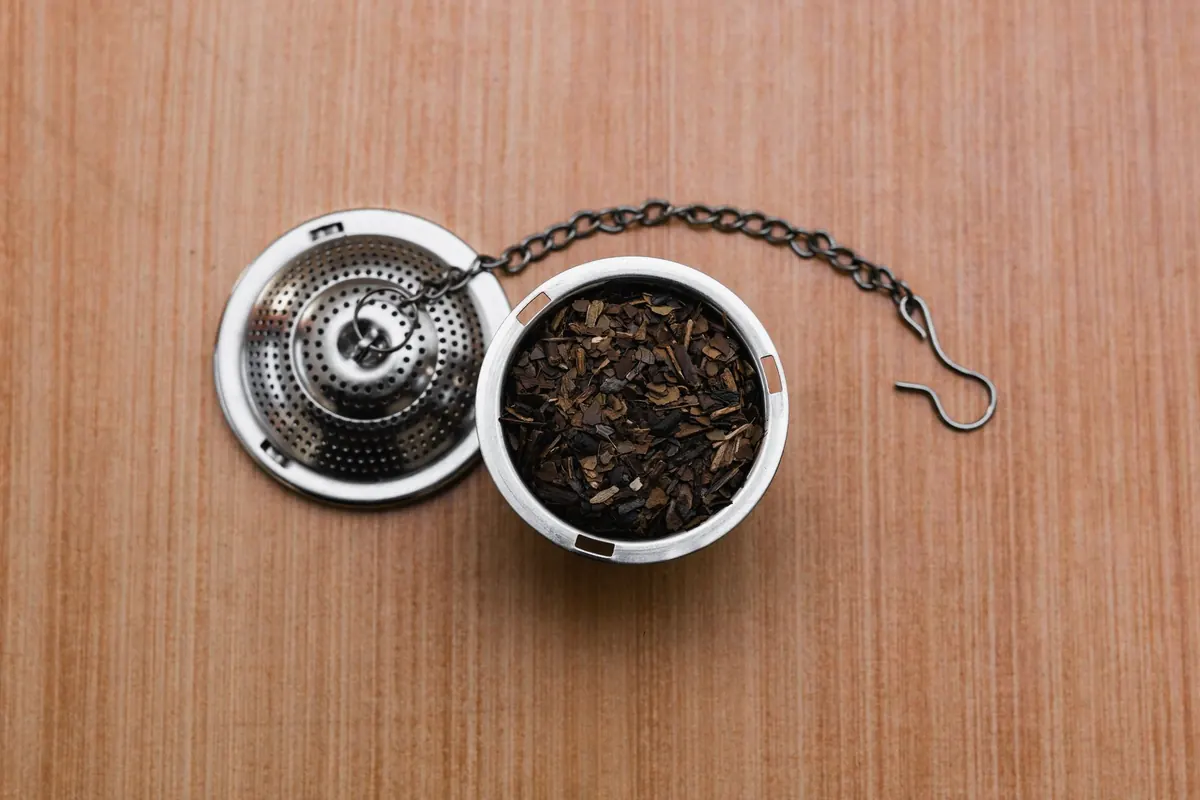
- Make or pour the tea. Any tea. A bag in a mug, loose leaves, or the half-cup you forgot about twenty minutes ago and can top up with hot water. Do not let the pause depend on the perfect cup, because it never will be.
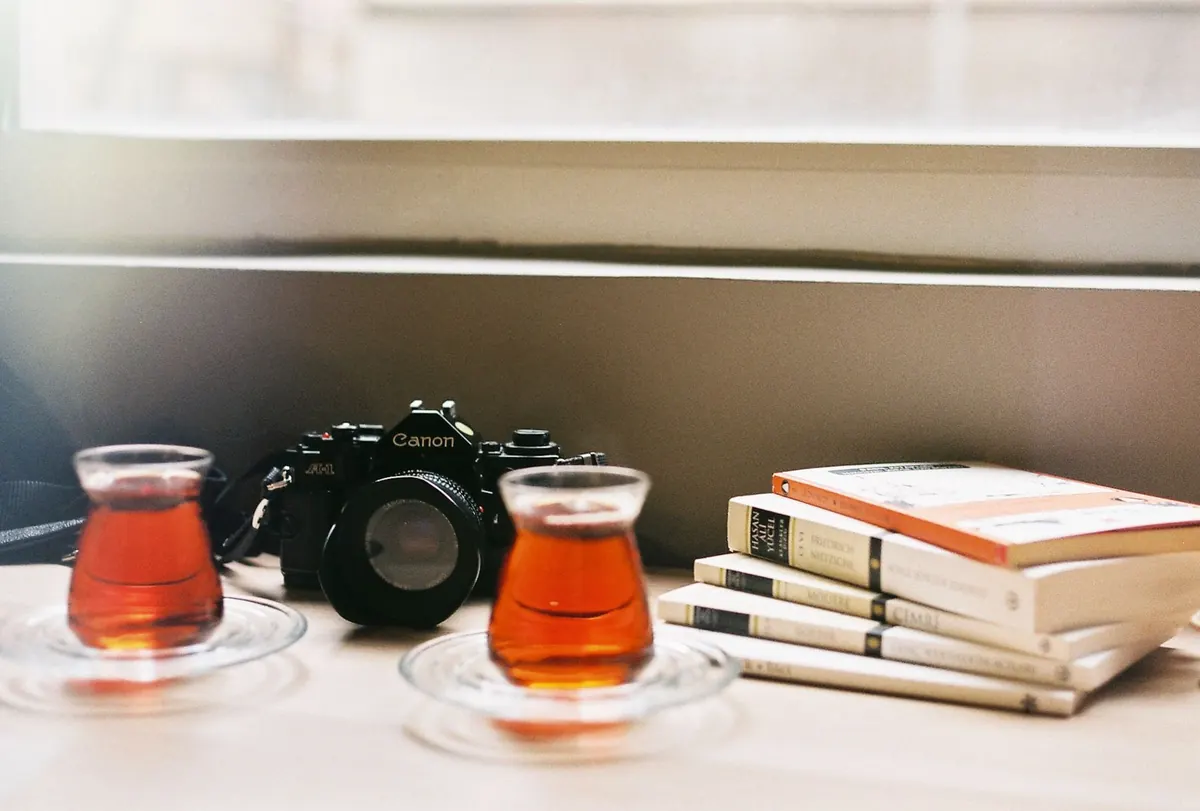
- Hold the cup with both hands. Feel the weight. Notice where the warmth reaches your palms and fingers. If you are standing, plant your feet flat and let your shoulders come down away from your ears.
- First breath. In through the nose, out through the nose, with the exhale a touch longer than the inhale. Count it silently as one.
- Second breath. Same rhythm, but this time add one thing: the smell. Steamed leaves, dried fruit, toasted grain, whatever is actually there. Two.
- Third breath. Let go of the counting and take one ordinary breath. Three. Feel your feet, your seat, your hands around the cup.
- Sip once. One sip, not a gulp. Taste it before you swallow. Then swallow, set the cup down, and decide what you are doing next.
That last step is the quiet point of the whole thing. Between the sip and the next task, there is a half-second where you get to choose rather than react. Most days that half-second is all you need.
Three Ways to Shrink It Further
The desk version
No kettle, no leaving your chair, no one noticing. You have a mug of something already going cold. Three breaths, one sip, back to the screen. Cold tea tastes different, and noticing that is part of the practice.
The doorway version
Before you walk into the house, or into a meeting room, or through the front gate. Sit in the car or stand on the step, hold whatever you have — a travel mug, a water bottle, your own empty hands if that is all there is — and take the three breaths. The sip is optional. The threshold is the cue.
The no-tea version
Hot water with lemon, a plain glass of water, or nothing at all. The cup is helpful, not essential. What you are building is the habit of a deliberate pause, and the drink is simply the thing you hang it on.
What Usually Goes Wrong
- The tea goes cold because you forgot. This is not failure; it is the practice showing up. Cold tea still works. Pour it anyway.
- You turn it into a performance. Checking whether it worked, chasing a particular feeling, rating your own calm. The pause is not a test. Notice the checking, and take the next breath.
- You make it elaborate. Weighing leaves, warming the pot, timing the steep on a scale. Lovely on a Sunday, too much on a Wednesday. Keep the weekday version plain.
- You speed-sip. One sip means one sip. If you have already swallowed before you tasted anything, that is useful information about how fast you are moving.
A gentle note: a three-breath pause is a small kindness, not treatment. If anxiety, low mood or physical symptoms are persistent or getting in the way of daily life, speak with a doctor or a qualified mental health professional rather than relying on tea alone.
Building the Habit Without Adding Another Chore
Attach the pause to something you already do, and only one thing. The kettle boiling. Sitting down at your desk. The moment after you close the laptop for the day. One anchor, chosen in advance, works far better than a list of five good intentions.
Keep the equipment boring for the first few weeks. Same mug, same tea, same spot by the window if you have one. Novelty is enjoyable and it is also friction, and friction is what kills small practices.
And treat a missed day as nothing at all. There is no streak to protect, no chart to keep. The pause exists to be available, not to be accomplished. The next cup is always a fresh start.
Start With Tonight's Cup
You do not need a new routine, a journal, an app or a quiet room. You need the next cup of tea you were going to make anyway.
When it is in your hands today, before the first sip, take three slow breaths and notice the warmth. Then sip once and taste it properly. That is the entire assignment.
Do it for a week of ordinary days and it stops being a technique. It becomes the small hinge in your afternoon — the place where the rush pauses for ninety seconds and you get to be the one who decides what happens next.
Photo: Myriams-Fotos / Pixabay